
By Ali Rehman Khan
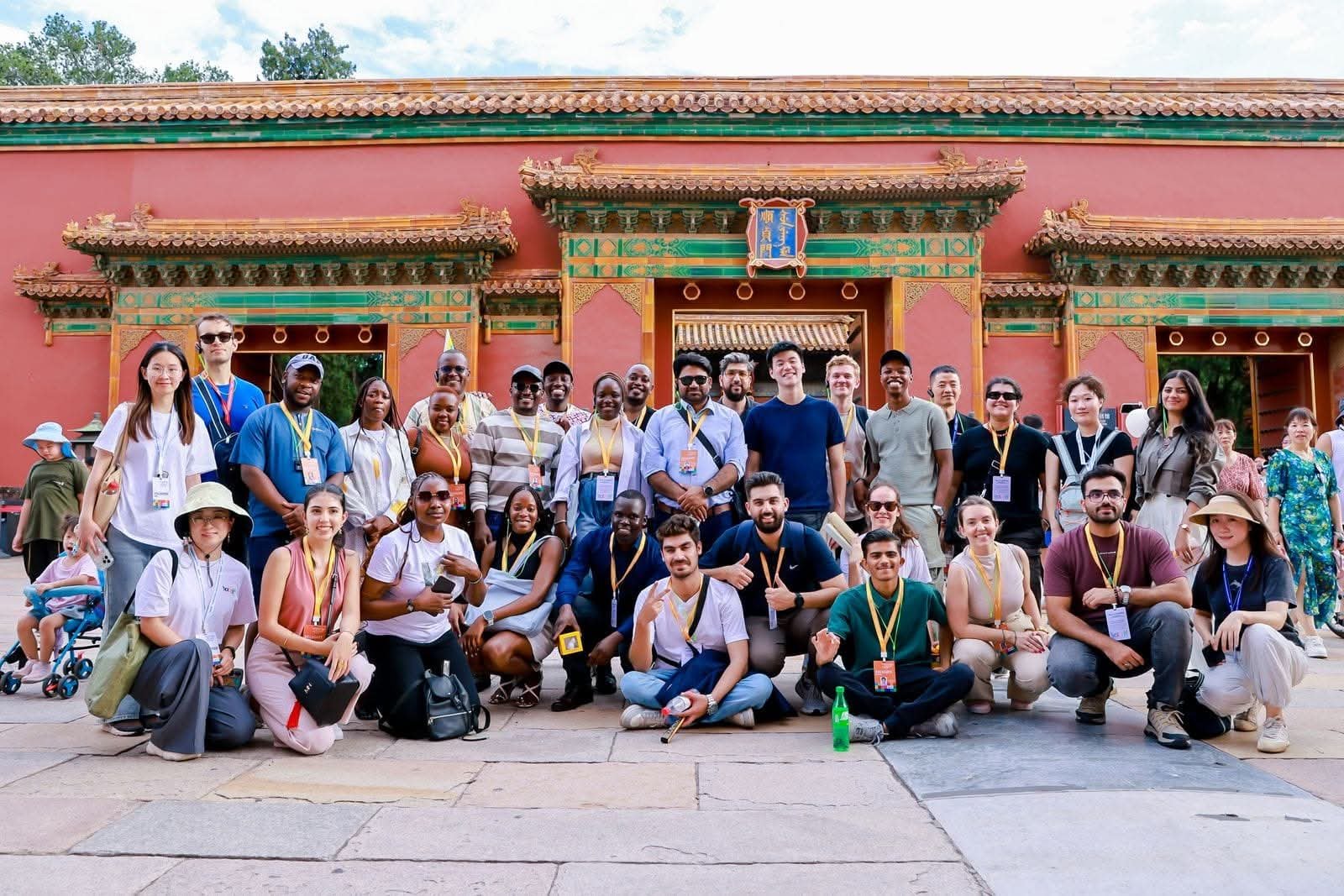
In 2023, I came across a call for proposals under the Global Youth Development Action Plan. I submitted an idea focused on youth empowerment through digital skills and social entrepreneurship for a sustainable future. That application led me to the World Youth Development Forum in China, an experience that reshaped how I understand global development and the role of youth in global governance. Before attending the Forum, global initiatives felt distant. They were frameworks discussed at high level meetings. After participating, engaging with young leaders from across continents, and witnessing China’s development firsthand, I began to see global governance differently. It is not only about policy. It is about execution, and youth must be central to that execution.
Global Development Through the Lens of Youth Action
Young people do not experience global challenges as policy concepts. We experience them as unemployment, climate vulnerability, digital inequality, and limited access to opportunity. For us, development is not theoretical. It is immediate and personal. Global development initiatives, including the Sustainable Development Goals, provide a shared direction. They define priorities and align countries around common objectives. However, direction alone does not produce impact. Implementation does. Youth are uniquely positioned to bridge that gap.
1. First, young people are close to community realities. We understand local contexts, social dynamics, and the barriers that prevent progress. This proximity allows us to translate global frameworks into practical solutions.
2. Second, youth adapt quickly to technology. Digital tools, artificial intelligence, and online platforms are natural environments for our generation. This adaptability enables faster innovation and scalable solutions.
3. Third, we have a long-term stake. The decisions made under today’s global governance systems will shape the next several decades of our lives. We are not temporary stakeholders. We are the generation that will inherit both the risks and the rewards of these decisions.
For these reasons, youth participation should move beyond symbolic representation. It should become structured partnership, where young leaders are involved in co designing and implementing development strategies.
From Forum Participation to Community Impact
The World Youth Development Forum in China provided more than dialogue. It created networks, accountability, and a platform for action. I engaged with young leaders working on climate action, digital transformation, education access, and sustainable agriculture. Many were already leading projects with measurable impact in their communities. Inspired by these exchanges, I returned home committed to executing my action plan. Over the following months, I trained and mentored approximately 300 young leaders in my community. The focus was clear and practical: equip them with digital skills, introduce social entrepreneurship models, and align their initiatives with the Sustainable Development Goals.
We worked on identifying real community problems and designing business models that addressed social and environmental challenges. As a result, between five and ten participants launched their own social enterprises. Among them were Youth Climate Action Organisation and Progressive Climate Foundation. These initiatives are now engaging local communities, raising awareness on environmental issues, and generating a ripple effect of youth driven change.
This progress was not accidental. It was made possible by the platform, exposure, and networks created through the Forum. It demonstrated that when youth are trusted with responsibility and provided with structured support, they deliver tangible outcomes.
Learning from China’s Development Experience
My visits to Beijing, Dalian, and Changsha offered insights that extended beyond conference sessions. Observing China’s infrastructure, technological advancement, and cultural continuity provided valuable lessons for youth leaders from developing regions. China’s growth reflects long term planning aligned with national goals, disciplined implementation, and rapid adoption of technology. Cities such as Shenzhen stand as living examples of how innovation ecosystems can transform economies within a generation.
Equally striking was the strong attachment to cultural values and traditions despite rapid modernization. Professionalism, accountability, and collective responsibility were visible across sectors. These qualities reinforced an important principle: sustainable development requires both vision and systems.
For youth engaged in global governance, this lesson is critical. Dialogue must translate into structured action. Forums should produce funded projects. Commitments should be followed by timelines and measurable indicators. Governance becomes credible when it produces results on the ground.
Youth and the Future of Global Governance
Global governance systems are evolving in a rapidly changing world shaped by digital transformation, climate urgency, and geopolitical shifts. Youth engagement must evolve with them.
Three priorities stand out.
1. First, institutionalized youth representation within governance platforms. Youth should participate not only as attendees but as contributors to policy design and review.
2. Second, dedicated funding mechanisms for youth led implementation projects. Access to resources determines whether ideas remain proposals or become impact driven programs.
3. Third, cross border youth innovation networks supported by governments and multilateral institutions. Development challenges are global. Youth collaboration must be global as well.
My journey from submitting a proposal in 2023 to mentoring hundreds of young leaders reinforced a simple truth. Youth do not seek visibility for its own sake. We seek responsibility and opportunity to act.
Global development will succeed when youth are recognized not merely as beneficiaries of policy, but as partners in governance and drivers of implementation. The transition from dialogue to delivery depends on this shift.
The future of global governance is being shaped today. Youth must be trusted to help build it.